Flood Solutions for Texas Homeowners
Water Diversion:
Keep Runoff Away From Your Home
Water diversion is one of the most important flood prevention strategies for Texas homes, forming the first line of defense before water reaches entry points or foundations. The most effective flood protection starts before water ever reaches your foundation. Smart water diversion routes runoff away from your home using gutters, grading, drains, and gardens — often with simple DIY solutions that save thousands in future repairs.
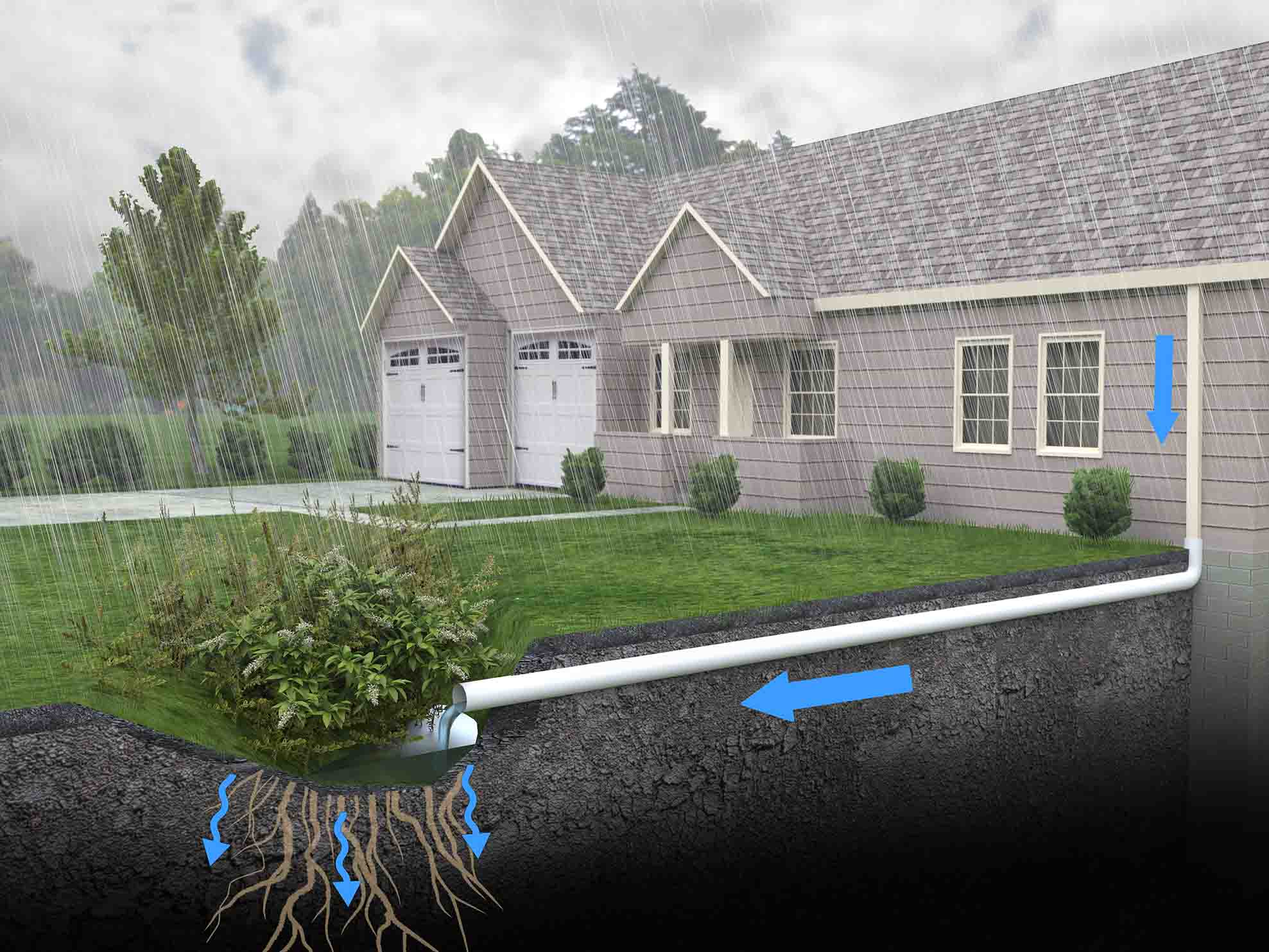
Water diversion Texas homeowners rely on is one of the most effective ways to prevent flood damage before it starts. In Texas, the threat isn’t usually a river overflowing its banks — it’s the rain that falls on your own property and has nowhere to go.
The good news: most water diversion solutions are achievable for motivated homeowners. The challenge is knowing which tool fits your specific situation — and recognizing when a problem is complex enough to require professional engineering. The four guides below break down every major water diversion approach for Texas homes.
Water Diversion Solutions in Texas: Complete Guides
Gutters & Downspouts
Your gutters and downspouts are the first line of defense — they collect rainwater from thousands of square feet of roof and direct it away from the foundation. Learn how to clean, extend, and redirect downspouts as DIY projects, and when cracked joints or improper pitch require a pro.
Read the Guide →Grading & Drainage
The slope of your yard determines where every drop of rain ends up. The standard is 6 inches of drop over 10 feet away from the foundation. Learn how to identify low spots, fix negative grade with fill dirt, and understand when a drainage engineer is needed for major regrading work.
Read the Guide →French Drains
French drains are a time-tested solution for persistent standing water and soil saturation. A gravel-filled trench with a perforated pipe channels groundwater away from problem areas. Shorter runs in accessible soil are DIY-friendly; Texas clay, long runs, and foundation-adjacent work call for a professional.
Read the Guide →Rain Gardens
A rain garden is a shallow depression planted with native, deep-rooted plants that capture runoff and let it percolate slowly into the soil. They’re one of the most sustainable — and beautiful — water diversion solutions available, and most installations are well within DIY reach for Texas homeowners.
Read the Guide →How Water Diversion Works for Texas Homes
Water diversion Texas systems work best as a layered approach — managing runoff from roof to soil to drainage exit points across your property.
Gutters catch runoff before it cascades off the eaves and saturates soil directly against the foundation.
Extensions and diverters direct collected water at least 6–10 feet from the house before it’s released.
Proper yard slope ensures water released from downspouts — and rainfall on the lawn — flows away from the structure.
French drains intercept groundwater and subsurface flow in chronic wet spots, routing it to a safe discharge point.
Rain gardens provide a final collection point, slowly returning runoff to the aquifer rather than directing it to the street.
DIY vs Professional Water Diversion in Texas
✅ Strong DIY Candidates
- Cleaning gutters and adding downspout extensions
- Installing downspout diverters to redirect flow
- Adding fill dirt to restore positive grade in a single low spot
- Short French drain runs (under 50 ft) in accessible sandy or loamy soil
- Rain garden installation in most yards with good soil percolation
- Swales along property edges with a clear discharge point
🚫 Call a Professional When…
- Water is entering the foundation, crawlspace, or basement
- The yard slopes toward the house across a large area
- Soil is heavy clay requiring a trenching machine
- Drainage must connect to municipal infrastructure or easements
- Multiple systems need to be engineered to work together
- You’ve tried DIY fixes and the problem keeps returning
⚠️ Texas Soil Warning
Much of Texas — particularly the Houston metro, DFW, San Antonio, and Austin areas — sits on highly expansive clay soil. Clay absorbs water slowly, swells when wet, and can shrink and crack during dry spells, creating new pathways for water intrusion. Any drainage solution on clay soil requires extra attention to slope, pipe sizing, and discharge point design. When in doubt, start with a professional soil evaluation before investing in a large DIY project.
Choosing Water Diversion Solutions in Texas
| Problem You’re Seeing | Best Starting Point | DIY-Friendly? |
|---|---|---|
| Water pooling against the foundation after rain | Downspout extensions + grading | Often Yes |
| Gutters overflowing during heavy rain | Gutter cleaning + downspout check | Yes |
| Standing water in a low area of the yard | French drain or rain garden | Often Yes |
| Chronically wet soil along a fence or property edge | French drain with perforated pipe | Depends on soil |
| Runoff from neighbor’s property crossing your yard | Swale + rain garden combination | Consult first |
| Yard slopes toward the house across a wide area | Professional regrading | Call a Pro |
| Water in the foundation or crawlspace | Full drainage assessment | Call a Pro |
| Driveway or patio runoff sheeting toward the house | Channel drain + downspout routing | Often Yes |
🤠 Water Diversion in the Texas Context
Texas storms are not gentle. The state regularly experiences rain events that drop 4–10 inches in a single day — events that overwhelm even well-designed drainage systems. Water diversion alone cannot protect a home during an extreme flood event. But it dramatically reduces the risk and severity of damage from the far more common moderate-to-heavy rain events that occur multiple times every year across the state.
Harris County, Fort Bend County, and Bexar County all have floodplain management resources and may offer rebates or technical assistance for drainage improvements. Check with your local floodplain administrator before undertaking major grading or drainage work — some improvements require permits, and qualifying upgrades may reduce your NFIP flood insurance premiums under the Community Rating System (CRS).
Not Sure Where to Start?
If you’re unsure which water diversion Texas solution fits your property — or previous fixes haven’t worked — a professional assessment can identify the exact problem and solution.