Table of Contents
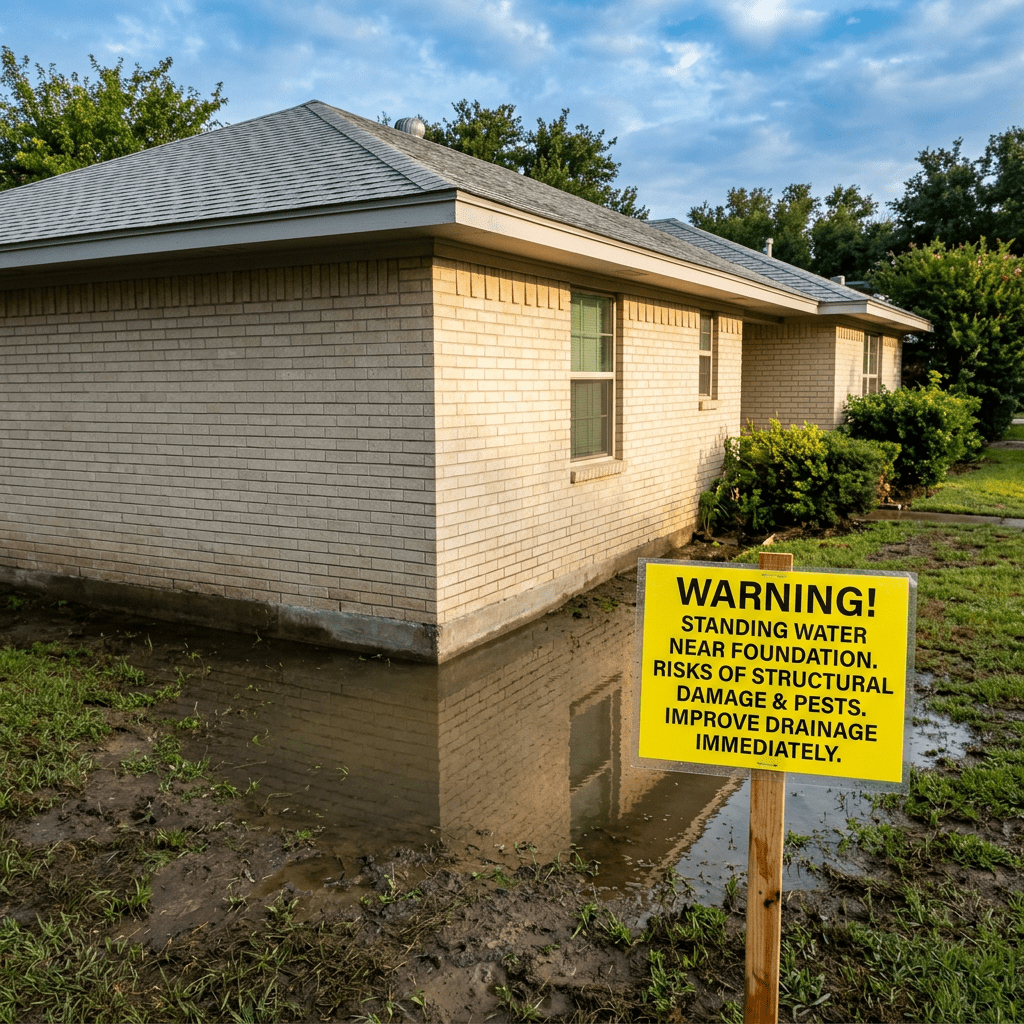
Water pooling around house after rain is a common problem for Texas homeowners. After a heavy rainstorm, many Texas homeowners notice something concerning:
Water sitting near the foundation, collecting in low spots, or slowly draining away hours after the rain stops.
At first, it may seem harmless.
But persistent pooling water around your home can be an early warning sign of drainage problems, foundation stress, erosion, or future flood and water intrusion risks.
The good news is that many drainage issues can be identified and improved before they become expensive repairs.
Why Water Pooling Around House After Rain Matters
Your home’s drainage system is designed to move water away from the structure as quickly as possible.
When water remains near the home instead of flowing away, several problems can develop over time:
- Foundation movement or cracking
- Soil erosion
- Water intrusion into garages or crawl spaces
- Mold and moisture issues
- Landscaping damage
- Increased flood vulnerability
- Higher long-term repair costs
In Texas, where storms can produce intense rainfall in short periods of time, poor drainage problems can escalate quickly.
The Most Common Reasons Water Pools Around Homes
1. Poor Grading Around the Foundation
One of the most common causes is improper grading.
The ground around your home should slope away from the structure so water naturally drains outward.
If the soil is:
- flat
- sloped toward the home
- settled unevenly over time
water may begin collecting near the foundation instead.
Signs of grading issues include:
- puddles near walls
- muddy areas after rain
- exposed roots
- visible erosion channels
2. Short or Improperly Positioned Downspouts
Your roof collects a massive amount of rainwater during storms.
If downspouts discharge water too close to the house, that water may immediately pool near the foundation.
A single storm can dump thousands of gallons of roof runoff around your property.
Common problems:
- downspouts ending directly at the foundation
- disconnected extensions
- crushed drainage pipes
- clogged emitters
Simple downspout extensions are often one of the easiest and most affordable improvements homeowners can make.
3. Compacted Soil and Clay Soil Conditions
Many areas of Texas contain dense clay-heavy soils.
Clay soil absorbs water slowly and expands significantly when wet.
This creates two problems:
- water drains more slowly
- soil movement can stress foundations
If your yard stays soggy for long periods after rain, soil composition may be contributing to drainage problems. Learn more about stormwater management from the EPA’s stormwater resources
4. Clogged Gutters and Drainage Systems
Blocked gutters prevent water from flowing properly through the roof drainage system.
Instead, water may overflow directly near the house.
Common causes include:
- leaves
- debris
- pine needles
- damaged gutters
- improperly pitched gutters
Routine maintenance is one of the simplest ways to reduce water accumulation around the home.
5. Low Spots in the Yard
Over time, yards naturally settle.
This can create low areas where water collects repeatedly after storms.
If these depressions are close to the home, they can increase moisture exposure around the foundation.
In some cases, drainage swales, regrading, or French drains may help redirect water more effectively.
6. Overwhelmed Neighborhood Drainage Infrastructure
Sometimes the problem is larger than your individual property.
Rapid development, aging stormwater systems, clogged street drains, and increased runoff from roads and parking lots can overwhelm local drainage systems.
Even homes that have never flooded before may begin experiencing standing water due to changing neighborhood conditions.
Warning Signs You Should Not Ignore
You should investigate drainage issues if you notice:
- standing water lasting more than 24–48 hours
- water touching foundation walls
- garage flooding
- recurring soggy soil
- foundation cracks
- musty odors
- erosion near the house
- mulch washing away repeatedly
These may indicate larger drainage vulnerabilities developing over time. Especially if you’re experiencing water pooling around house after rain regularly.
What Homeowners Can Do to Reduce Pooling Water
Many drainage improvements are relatively manageable compared to major flood repairs. The right approach to stopping water pooling around house after rain depends on your property’s specific conditions.
Potential solutions include:
- extending downspouts
- regrading soil
- cleaning gutters
- installing catch basins
- adding French drains
- improving yard drainage paths
- installing sump systems
- using splash blocks and diverters
- reducing hardscape runoff toward the home
The best solution depends on the specific property layout and drainage conditions.
Why Early Action Matters
Drainage problems rarely improve on their own. If water pooling around house after rain is left unaddressed, these issues compound.
In many cases:
- erosion worsens
- soil movement increases
- moisture exposure expands
- repair costs grow over time
The earlier homeowners identify vulnerabilities, the more affordable and manageable mitigation usually becomes.
Understand Your Property’s Flood and Drainage Risk
At Oiriunu, we help homeowners better understand property-level flood and water risks before damage occurs.
Our assessment helps identify:
- drainage vulnerabilities
- flood exposure concerns
- mitigation opportunities
- resilience improvements
- practical next steps
FAQ
Is water pooling near my foundation dangerous?
Yes. Persistent standing water near foundations can contribute to erosion, moisture intrusion, and foundation movement over time.
How long should standing water remain after rain?
Water that remains longer than 24–48 hours may indicate poor drainage conditions.
Can downspouts cause water pooling?
Yes. Short or improperly placed downspouts are one of the most common causes of pooling water near homes.
What is the cheapest way to improve drainage around a house?
Common low-cost improvements include cleaning gutters, extending downspouts, using splash blocks, and minor grading adjustments.
1 thought on “Common Causes of Water Pooling Near Foundations”